Why Does Wingdings Exist & What Is It Used For?
It’s one of the strangest questions in computing: why does Wingdings exist? Why would Microsoft bundle a font made of smiley faces, arrows, and zodiac signs with every copy of Windows — and why is it still there, more than thirty years later? The answer is more practical — and more interesting — than the conspiracy theories suggest.
In this guide, we’ll answer why does Wingdings exist, what it was originally invented for, what it is genuinely used for today (from 1990s newsletters to Undertale), and why Microsoft has never removed it. By the end, you’ll understand the real purpose of Wingdings — and whether it’s still useful in 2026.
The Short Answer: Why Wingdings Exists
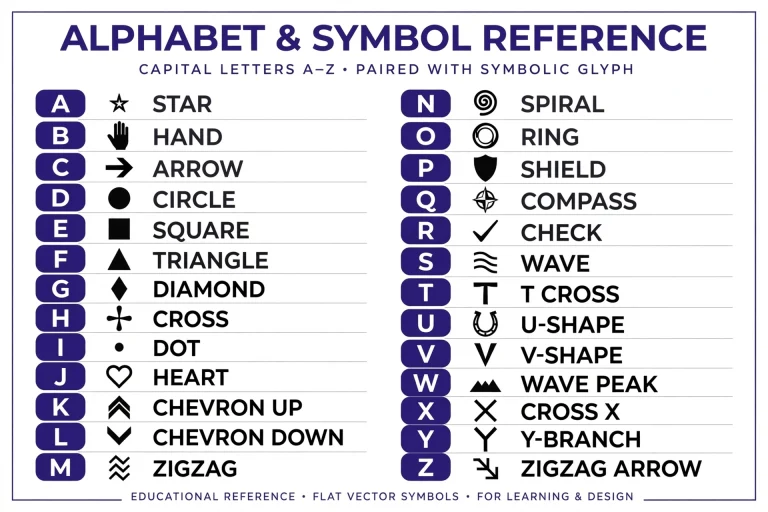
Why does Wingdings exist? Wingdings exists because, in the early 1990s, computer users needed an easy way to add symbols — bullets, arrows, checkmarks, ornaments — to their documents. Before emoji and icon libraries, a symbol font was the simplest solution: Microsoft licensed professional dingbat designs, packaged them as the Wingdings font, and shipped it with Windows 3.1 in 1992 so millions of people could decorate documents without graphics software.
Key fact: Wingdings was never meant to be a secret code. It was a practical tool — a library of 224 useful symbols disguised as a font — created for the era when personal publishing was brand new.
The Dingbat Tradition: Centuries Before Wingdings
To understand why does Wingdings exist, you have to know what a “dingbat” is. Printers have used small decorative glyphs — asterisks, daggers, pointing hands, floral ornaments — since the earliest days of the printing press. These ornaments, called dingbats, separated sections, marked important passages, and beautified pages.
In 1978, the legendary type designer Hermann Zapf created Zapf Dingbats, one of the first dingbat fonts for the digital age. It proved that symbol fonts had real commercial value. When Apple and Microsoft began building TrueType in the late 1980s, they knew symbol fonts would be essential — users would want arrows, bullets, and ornaments just as much as letters. For background on the font itself, see the Wingdings article on Wikipedia.
Why Operating Systems Needed Symbol Fonts
In 1990, Microsoft was launching TrueType — technology that let Windows render scalable fonts on screen and on paper. To demonstrate it, Microsoft needed a showcase font collection. Text fonts showed off readability; symbol fonts showed off versatility.
Microsoft licensed three professional symbol sets from the type studio Bigelow & Holmes — Lucida Icons, Lucida Arrows, and Lucida Stars — combined them into one font, and named it Wingdings (Windows + dingbats). When Windows 3.1 launched in 1992, Wingdings rode along. Overnight, the answer to “why does Wingdings exist” was simple: so that every Windows user could add professional-looking symbols to anything they printed.
What Wingdings Was Actually Used For in the 1990s
In its heyday, Wingdings had genuinely practical uses:
- Newsletters and flyers: Home publishers used Wingdings ornaments as borders, dividers, and bullet points — instant decoration without clip art.
- Forms and checklists: Wingdings 2’s checkmarks, ballot boxes, and circled numbers were made for forms.
- Diagrams: Wingdings 3’s huge arrow collection served flowcharts and instructional documents.
- School worksheets: Teachers used stars, faces, and shapes for rewards, matching games, and visual cues.
- Party invitations: A generation of birthday invitations was bordered with Wingdings flourishes.
This is the forgotten, ordinary truth behind why Wingdings exists: it was clip art for people who didn’t have clip art.
What Is Wingdings Used For Today?
The 1990s use cases faded, but Wingdings found a second life. Here’s what Wingdings is used for now:
Undertale and the Gaster phenomenon
The biggest reason Wingdings still matters culturally is the game Undertale (2015). The mysterious character W.D. Gaster “speaks” entirely in Wingdings, turning the font into a puzzle mechanic and a fandom obsession. Our Gaster translator exists because thousands of fans needed to decode his dialogue. This is a key part of why does Wingdings exist in popular culture today.
Puzzles, ARGs, and escape rooms
Puzzle hunts and alternate-reality games use Wingdings as a lightweight cipher — readable to anyone with a decoder, mysterious to everyone else.
Secret messages
Kids still pass notes in Wingdings, and adults use it for playful secret messages. Our Wingdings translator makes encoding and decoding instant.
Retro design and nostalgia
Designers chasing a 90s aesthetic use Wingdings ornaments for authentic period flavor in graphics, zines, and throwback interfaces.
Teaching and worksheets
The symbols still work beautifully for matching games, visual schedules, and reward charts — some classroom uses never went away.
Why Does Wingdings Still Exist in 2026?
If its original purpose is obsolete, why does Wingdings exist on modern Windows at all? The answer is backward compatibility. Millions of old documents — resumes, newsletters, forms, worksheets — were created with Wingdings. If Microsoft removed the font, all those documents would break, displaying wrong characters or blank boxes.
Did you know? Microsoft almost never removes fonts from Windows. Each one is a promise to every document ever made with it. Wingdings survives for the same reason as MS Comic Sans and Times New Roman: history.
Internet Theories About Wingdings, Debunked
Because Wingdings looks like a code, it has attracted myths:
- “Wingdings predicted a tragedy”: Typing “NYC” yields a skull, a Star of David, and a hand — a coincidence of symbol placement, debunked by Microsoft.
- “Wingdings is a secret government code”: It’s a commercial dingbat font designed by professional typographers, not a cipher.
- “Wingdings contains hidden messages”: Every “message” found in Wingdings is pareidolia — humans finding patterns in random symbol assignments.
The real story — why Wingdings exists as a practical 1990s publishing tool — is less sensational but far more interesting.
An Honest Take: Is Wingdings Still Useful?
Honestly? As a font, Wingdings is mostly obsolete — emoji, icon fonts, and Unicode symbols do its old job better. But as a cultural artifact, it’s irreplaceable: a time capsule of early-90s computing, a beloved puzzle tool, and the “voice” of one of gaming’s most mysterious characters. Understanding why does Wingdings exist helps explain its cultural staying power.
So why does Wingdings exist today? Because millions of people still love it — and because the documents of the past deserve to keep working. Not a bad legacy for a font of tiny pictures.
Frequently Asked Questions
Why does Wingdings exist?
Wingdings exists because early-1990s computer users needed an easy way to add symbols to documents. Microsoft licensed professional dingbat designs and shipped them as a font with Windows 3.1 in 1992. It survives today for backward compatibility — and for puzzles, games, and nostalgia.
What is Wingdings used for?
Originally: decorating newsletters, forms, and worksheets in the 1990s. Today: puzzles and ARGs, Undertale/Gaster fan content, secret messages, retro design, and teaching materials.
Why was Wingdings invented?
It was invented to give everyday Windows users a built-in library of symbols — arrows, bullets, checkmarks, ornaments — without needing graphics software. It combined three professional symbol sets (Lucida Icons, Arrows, and Stars) into one font.
Is Wingdings still on Windows?
Yes. Wingdings, Wingdings 2, and Wingdings 3 still ship with Windows for backward compatibility, so decades of old documents continue to display correctly.
What is the real purpose of Wingdings?
Its real purpose was practical desktop publishing: easy access to decorative and functional symbols. The “secret code” reputation came later, from its mysterious appearance and internet folklore.
Why does Wingdings exist in the first place?
Wingdings exists because early-1990s users needed an easy way to add symbols to documents. Understanding why does Wingdings exist helps explain its lasting cultural impact.
Curious about the font itself? Read what Wingdings is, meet the people in who created Wingdings, or browse every symbol on the Wingdings chart. Learn more about why does Wingdings exist and its fascinating history.
Experience Wingdings Yourself
Now you know why Wingdings exists — see what the fuss is about. Convert any text into Wingdings symbols instantly with the free translator.